Shinjuku is one of the most important settings in Jujutsu Kaisen, serving as the stage for intense battles, everyday city life, and pivotal turning points in the series.
Many scenes are inspired by real places that exist in modern Tokyo — and all of them are easy to visit in a single day.
This guide focuses on Shinjuku, one of Tokyo’s busiest districts, and introduces the real-life locations featured in Jujutsu Kaisen, with clear access information and episode references.
What Is Jujutsu Kaisen?
Jujutsu Kaisen is a dark fantasy anime based on the manga by Gege Akutami and produced by MAPPA.
The series blends supernatural battles with realistic urban environments, especially in Tokyo.
Shinjuku appears repeatedly throughout the story, symbolizing both everyday normalcy and large-scale chaos — a contrast that makes the real-world locations particularly memorable for fans.
Jujutsu Kaisen Pilgrimage Map – Shinjuku Area
To help you explore efficiently, it’s recommended to use a custom Google Map marking all pilgrimage spots listed below.
Area Overview & Tips
Shinjuku Station holds the Guinness World Record for the highest number of daily passengers in the world, including transfer users.
Because of its immense scale and constant crowds, navigating the area can be confusing even for locals.
Most locations featured in Jujutsu Kaisen are either within walking distance or just one short train ride apart,
making Shinjuku an ideal area for a half-day or full-day anime pilgrimage.
To move efficiently, it helps to understand that Shinjuku is divided into two distinct sides:
the west side, known for its office district and the Tokyo Metropolitan Government Building,
and the east side, home to entertainment areas, department stores, and bustling nightlife.
Jujutsu Kaisen Real-Life Locations in Shinjuku
1. Shinjuku no Me (Subnade Pedestrian Area)
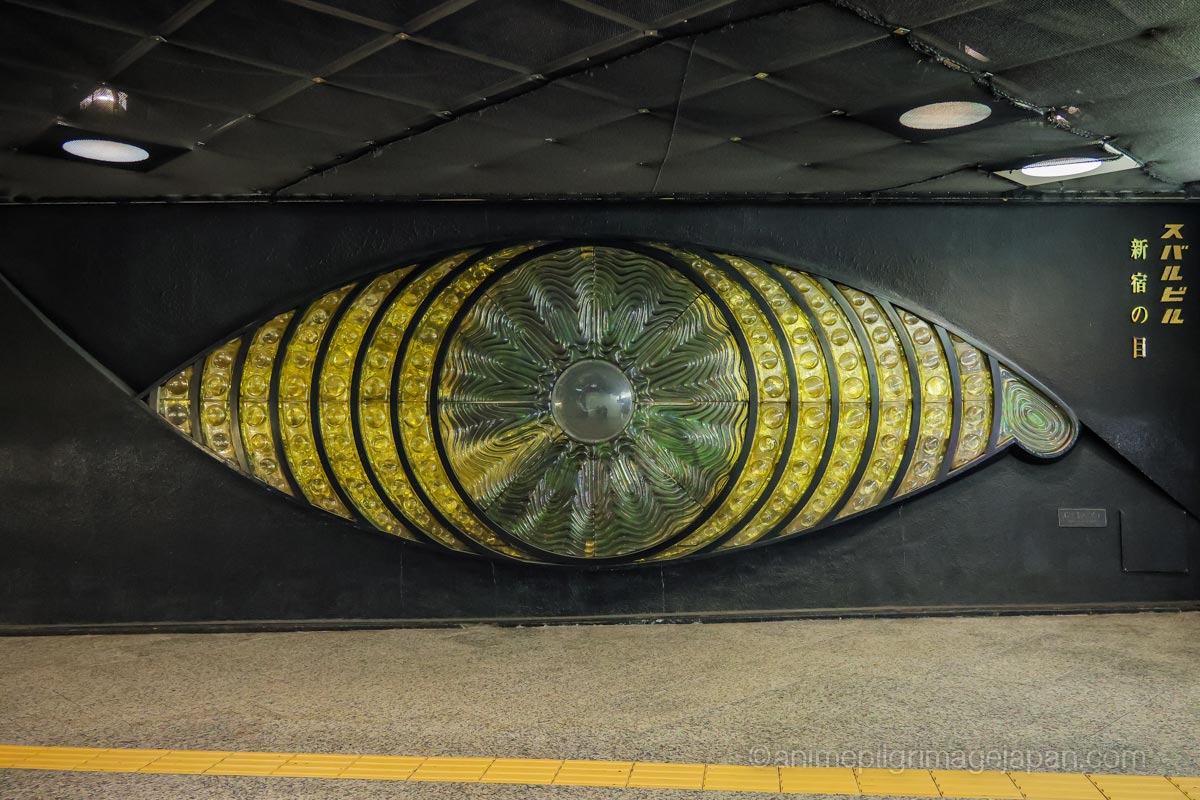
Anime Appearance: Season 1 Opening
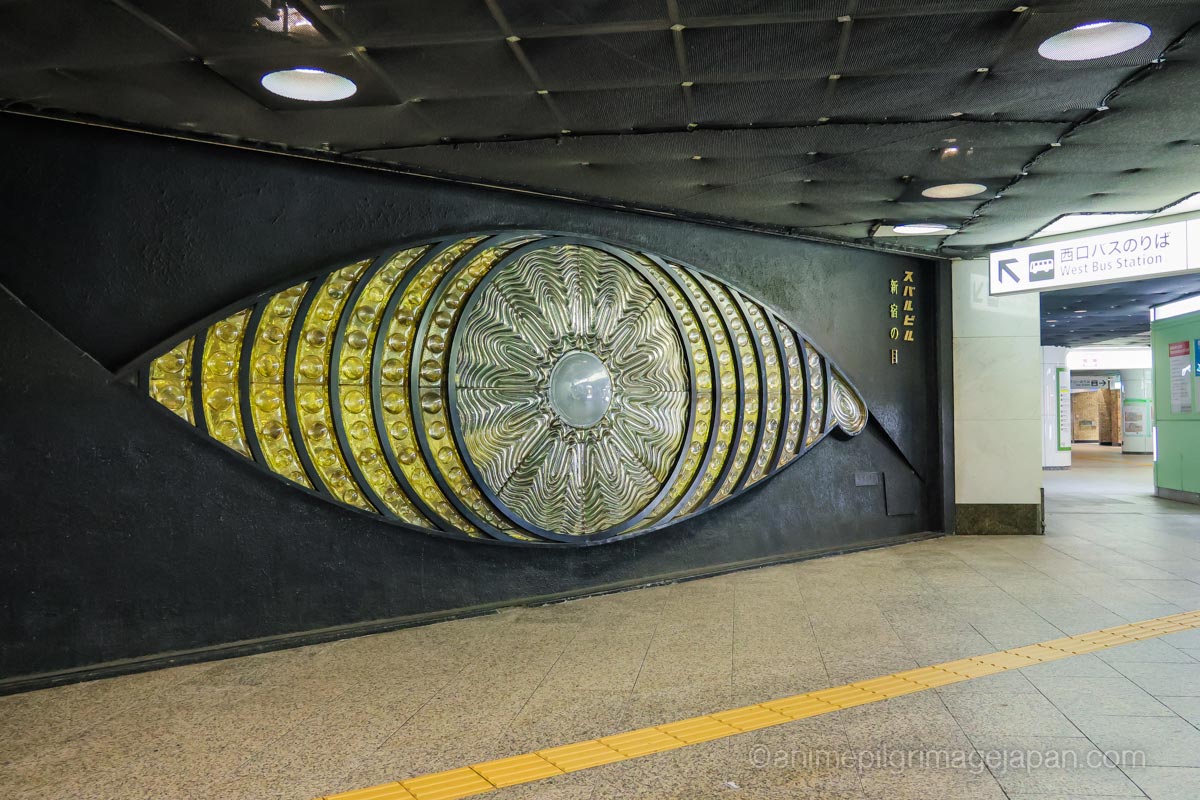
Shinjuku no Me is a distinctive object that appears in the opening sequence of Jujutsu Kaisen as the background behind Kaido.
This striking sculpture is a real public artwork created in 1969 and is located in the underground rotary on the west side of Shinjuku Station.
You can easily find it while walking from Shinjuku Station West Exit toward the Tokyo Metropolitan Government Building, making it a natural stop during a Shinjuku pilgrimage route.
Be careful not to go above ground, as the artwork is entirely located underground and can be missed if you exit to street level.
The interior of the sculpture contains built-in light bulbs, and the “eye” was originally designed with a rotating mechanism.
Today, however, the lighting is only activated on special occasions, giving the artwork a quiet and slightly eerie presence that matches the tone of the series.
Access
- Nearest Station: Shinjuku Station (West Exit)
- Located in the underground passage on the way to the Tokyo Metropolitan Government Building
2. Tokyo Metropolitan Government Building
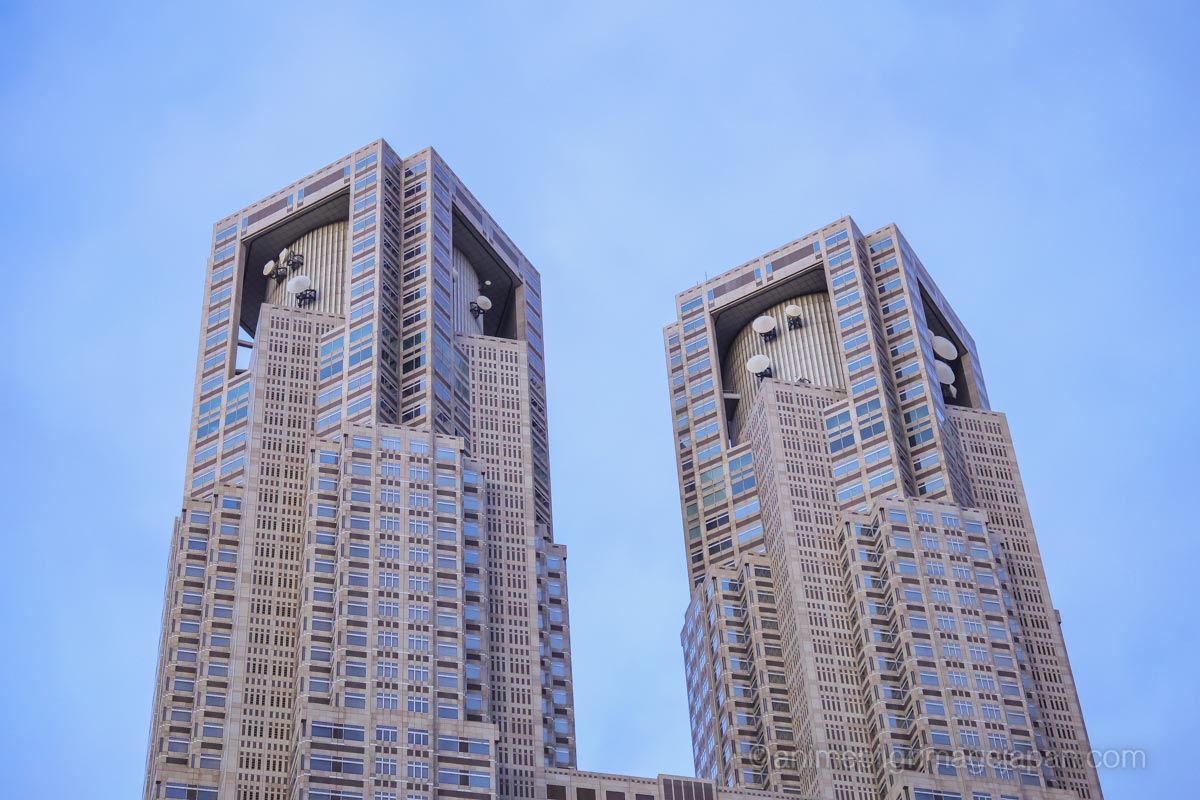
Anime Appearance:
Shibuya Incident Arc, Season 2, Episode 23 (Overall Episode 47)
The Tokyo Metropolitan Government Building appears briefly near the end of the Shibuya Incident arc, during a scene depicting Tokyo falling into chaos after the release of curses by Geto.
Although its appearance in the anime lasts only a moment, the building itself is one of the most rewarding sightseeing spots in Shinjuku.
The highlight is the free observation deck, which offers sweeping views of Tokyo’s cityscape.
There are two decks — the North Observatory and the South Observatory. The South Observatory tends to attract more tour groups, making it noticeably busier.
Because of its popularity, visitors may need to wait up to 30 minutes to enter, especially during peak hours. Planning extra time is strongly recommended.
The building is located a short walk from JR Shinjuku Station West Exit, but it is farther from other pilgrimage spots in this guide.
If you are short on time, focusing only on the East Exit area is a practical alternative.
Dining options around the Metropolitan Government Building are limited, with only a few casual cafés nearby.
Access
- Station: Tochomae Station (Toei Oedo Line)
- About a 10-minute walk from JR Shinjuku Station (West Exit)
3. KFC Nishi-Shinjuku
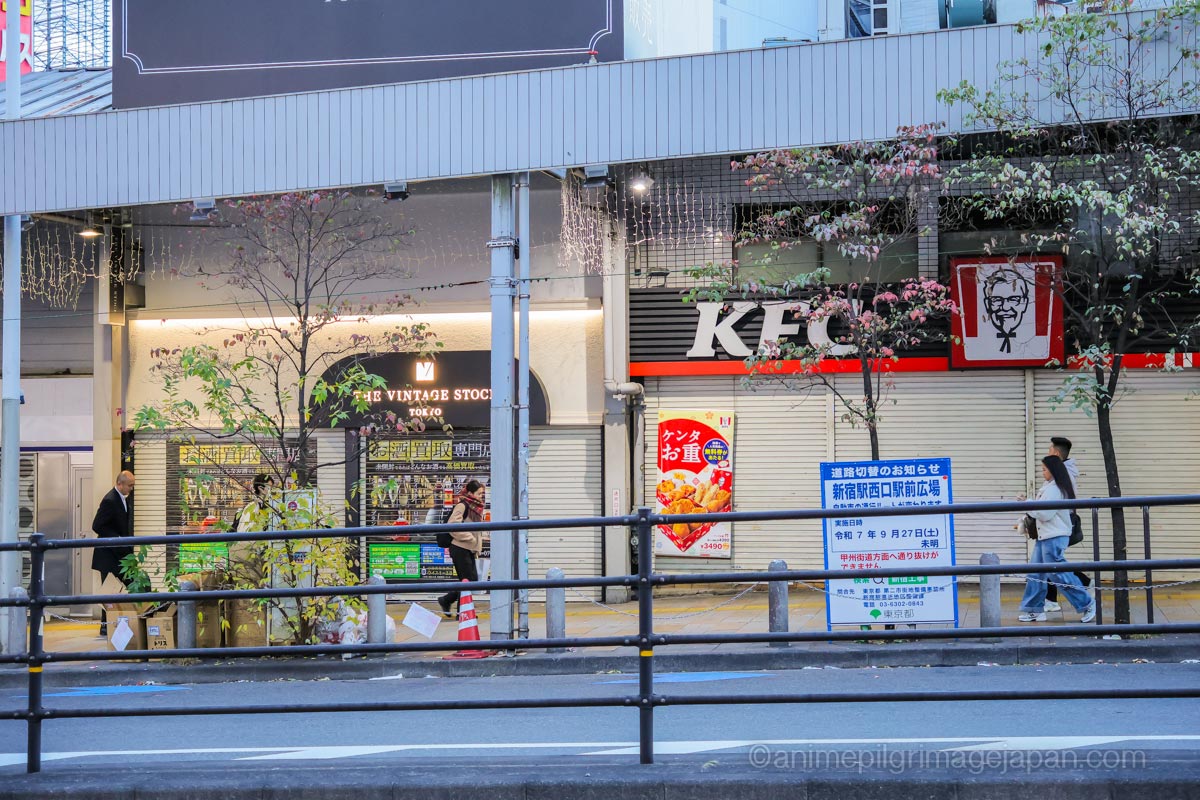
Anime Appearance: Season 2, Episode 5 (Overall Episode 29)
This location is where Gojo and Geto meet for the final time before choosing different paths.
During the daytime, the area is packed with pedestrians, and the scene in which Geto disappears into the crowd feels especially grounded and realistic because of this constant flow of people.
Although it is located on the west side of Shinjuku, the spot is close to the station.
From here, it is only a short walk to the JR Shinjuku East Exit Station Square, which is introduced next in this guide.
Just a few steps away is Omoide Yokocho, a narrow alley filled with small bars and eateries.
It is a popular sightseeing area where visitors can experience traditional Japanese izakaya culture.
Access
- Station: JR Shinjuku Station (West Exit)
- Located near Omoide Yokocho, within walking distance of Shinjuku’s East Exit area
Walking Route to JR Shinjuku East Exit Station Square
Moving from Shinjuku’s West Exit to the East Exit can be confusing, as the station is extremely large and has multiple underground passages.
To avoid getting lost, it is recommended to stay underground and follow the pedestrian route shown on the map below.
This walking route connects KFC Nishi-Shinjuku directly to the JR Shinjuku East Exit Station Square, allowing you to reach the next pilgrimage spot smoothly without unnecessary detours above ground.
4. JR Shinjuku East Exit Station Square
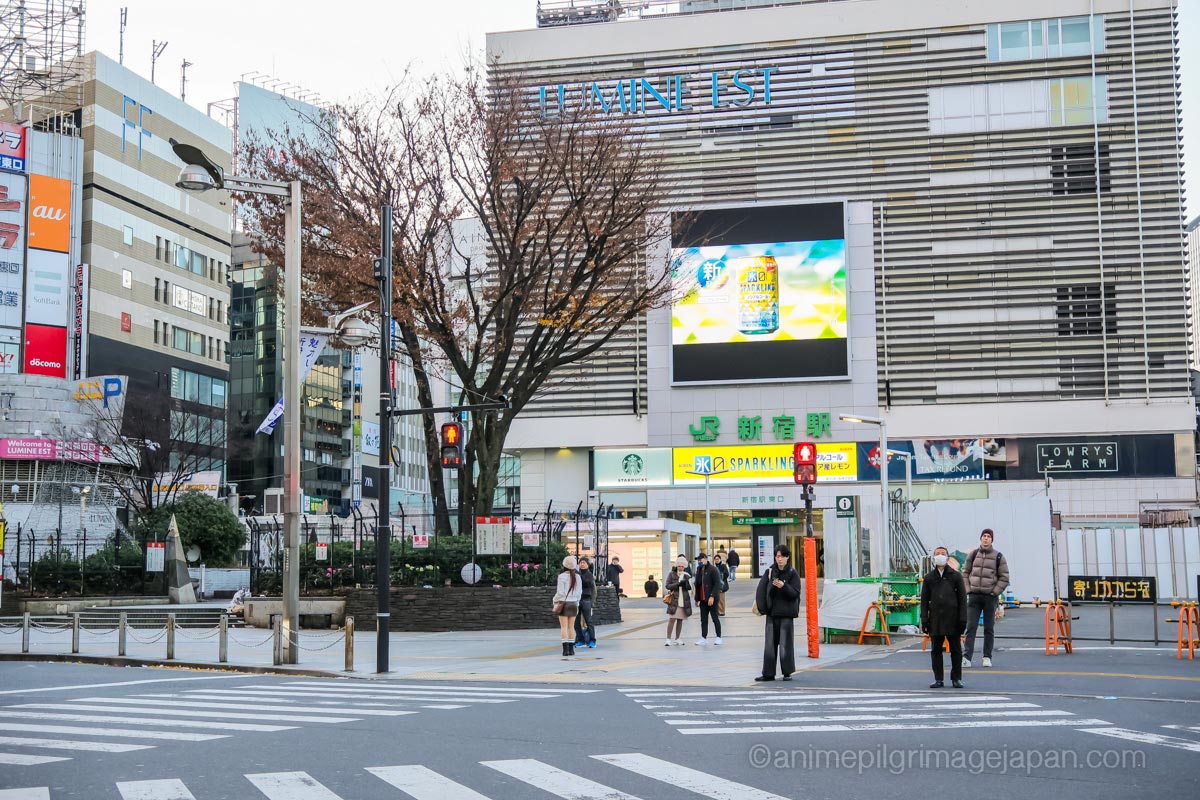
Anime Appearance: Season 2, Episode 5 (Overall Episode 29)
This station square is where Shoko is approached by Geto after he becomes a target for execution.
Due to ongoing construction work in the area, the layout sometimes changes, and it may not be possible to take photos from the exact same angle seen in the anime.
JR Shinjuku Station’s East Exit serves the busiest railway station in the world, handling an overwhelming number of passengers every day.
From daytime to late at night, the square is constantly crowded — in fact, Shinjuku is busy no matter where you go. Truly, everywhere.
For a more relaxed experience, consider visiting during pedestrian-only hours, often coordinated with Shinjuku-Dori Avenue, when vehicle traffic is restricted and walking becomes much easier.
Access
- Station: JR Shinjuku Station (East Exit)
- Located directly outside the main ticket gates
5. Ryuseidō Pharmacy Shinjuku Shop
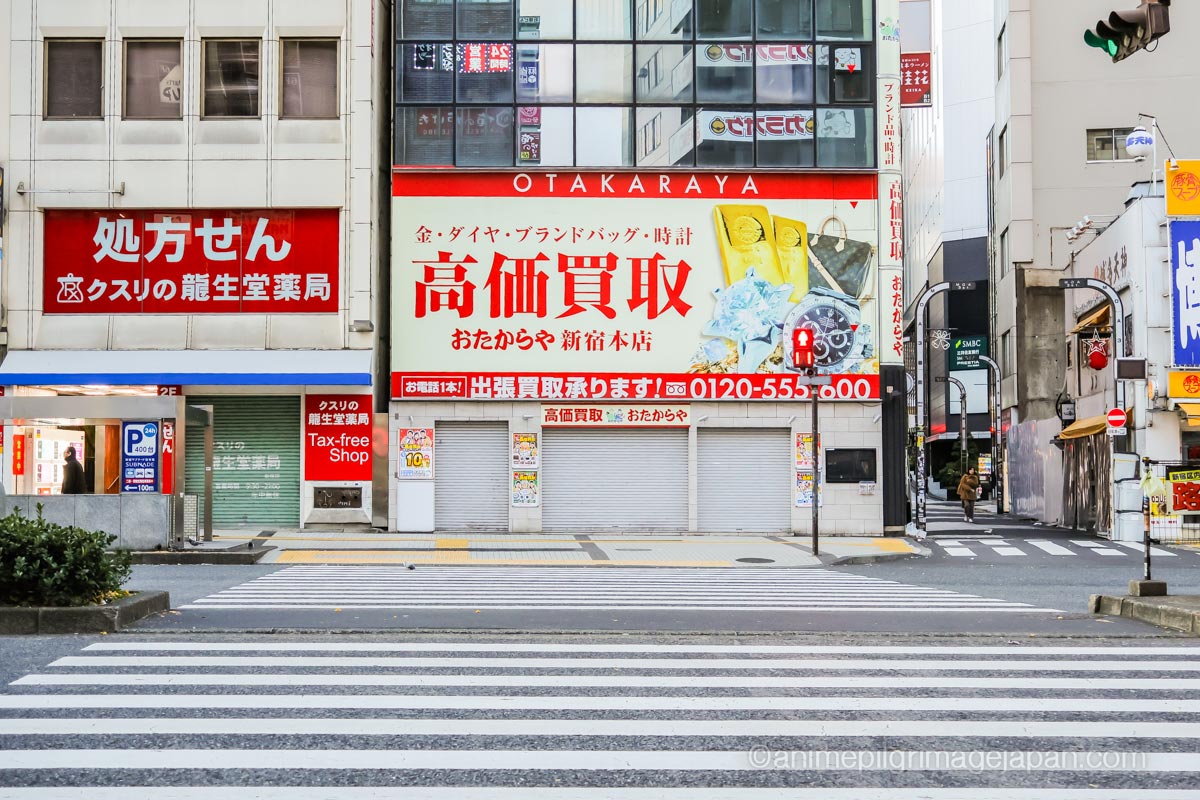
Anime Appearance: Season 1, Episode 5
This spot appears in a brief but memorable scene where Geto is shown waiting at a traffic light.
The moment captures a quiet pause in the middle of Shinjuku’s constant movement, grounding the character in an ordinary urban routine.
From here, it seems Geto continues along this route toward Gusto, which is introduced next in this guide.
Ryuseidō Pharmacy is located just a few minutes’ walk from JR Shinjuku Station’s East Exit, and the walk to the next stop, Gusto, also takes only a few minutes—making this section of the pilgrimage especially easy to follow.
Access
- Station: JR Shinjuku Station (East Exit)
- Walking distance to both this location and the next featured spot
6. GUSTO Shinjuku Yasukuni-dori
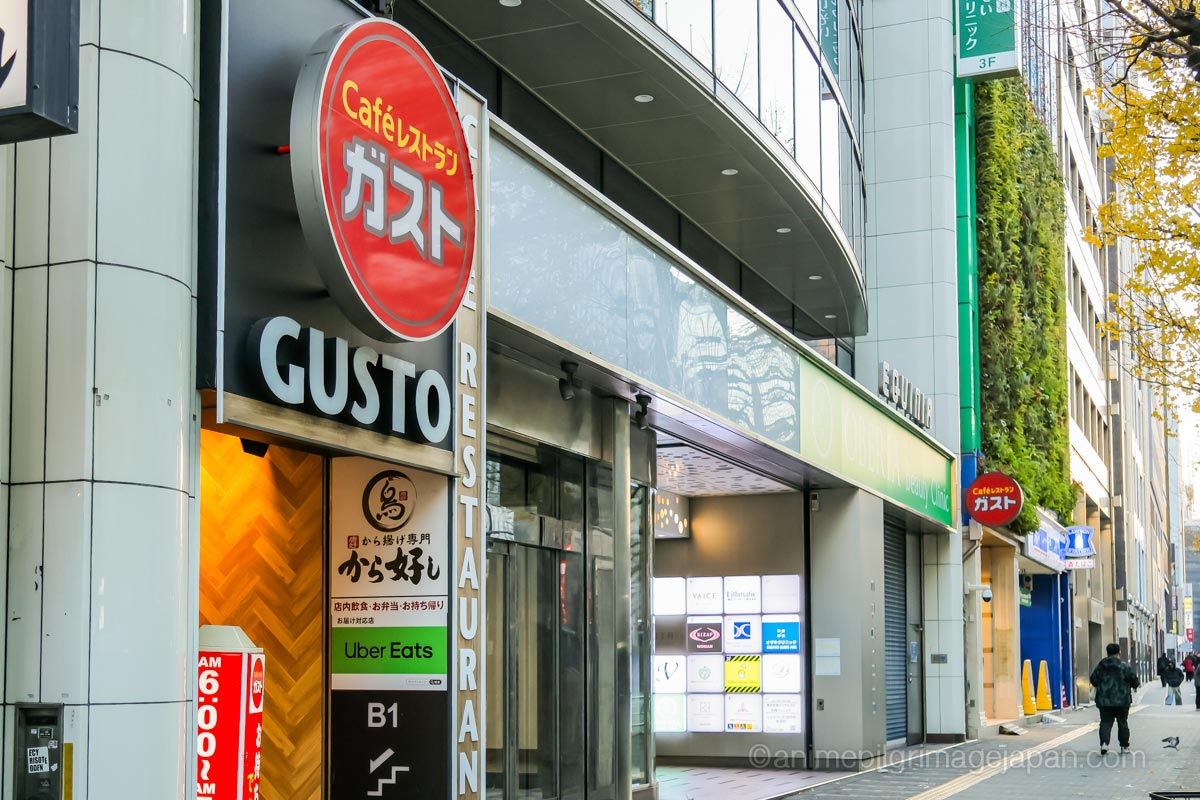
Anime Appearance: Season 1, Episode 5
This restaurant appears in a scene where Geto meets with Jogo and the other curses.
Here, they discuss how cursed spirits can gain the upper hand against jujutsu sorcerers, making the location narratively significant despite its ordinary appearance.
Gusto is a budget-friendly Japanese family restaurant chain, but the interior of this particular branch seems to differ from how it is depicted in the anime.
Located in the heart of Shinjuku, the restaurant is easy to access, though it is often crowded during peak hours, which may make extended visits or photo reference checks more difficult.
Access
- Station: Shinjuku-sanchome Station
- Located along Yasukuni-dori Avenue
7. Shinjuku-Dori Avenue
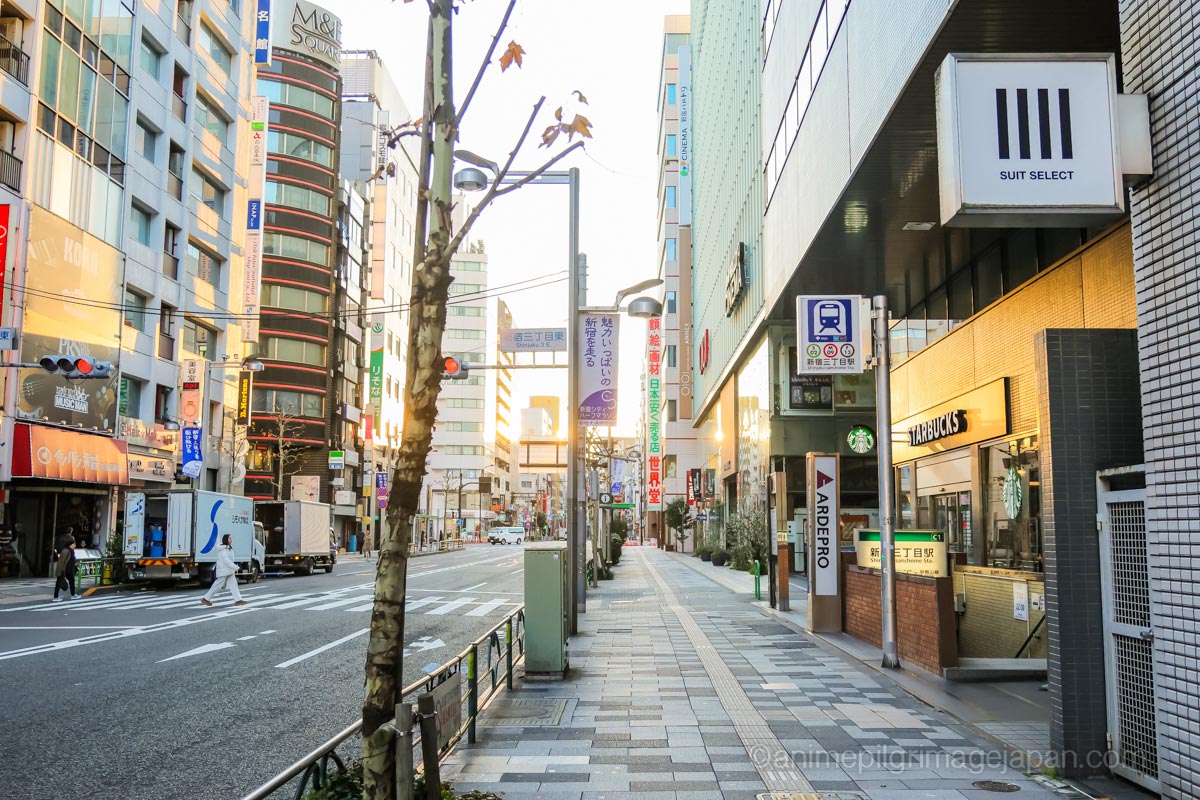
Anime Appearance: Season 1, Episode 24
This avenue appears near the end of Season 1, where Yuji Itadori, Megumi Fushiguro, and Nobara Kugisaki are shown shopping together.
The scene captures a rare, peaceful moment for the trio as they blend into everyday city life.
Shinjuku-Dori becomes a pedestrian-only zone on Sundays and public holidays from 12:00 to 17:00.
Outside of these hours, entry onto the roadway is restricted.
Since Yuji and the others are shown walking directly on the street, it is likely that this scene takes place on a Sunday.
At a nearby intersection stands Isetan Shinjuku, one of Japan’s most prestigious department stores.
The area is also home to other popular shopping destinations, including Marui and Uniqlo, making it an ideal place to explore and shop between pilgrimage stops.
Access
- Station: JR Shinjuku Station (East Exit)
- Direct access from the central shopping district
Recommended Shinjuku Pilgrimage Itinerary (Half Day)
This half-day route is designed to follow the geography of Shinjuku logically while reflecting the flow of scenes in Jujutsu Kaisen.
It starts on the east side, moves through everyday city locations, then transitions west via the underground before finishing with major landmarks.
Morning — East Shinjuku & Shopping District
Start at JR Shinjuku East Exit Station Square
Begin at one of the busiest station plazas in the world, where an important encounter involving Geto and Shoko takes place amid constant crowds.
Walk along Shinjuku-Dori Avenue
Continue through the shopping street featured near the end of Season 1, where Yuji, Megumi, and Nobara are shown spending time together.
If visiting on a Sunday or public holiday between 12:00–17:00, you can walk directly on the roadway during pedestrian-only hours.
Midday — Everyday Scenes in Motion
Visit the Ryuseidō Pharmacy area
Stop at the intersection where Geto is shown waiting at a traffic light before heading toward the next location.
This spot sits naturally along the route toward Yasukuni-dori.
Lunch at GUSTO Shinjuku Yasukuni-dori
Dine at the restaurant where Geto and the curses discuss how to defeat jujutsu sorcerers.
The location is central and convenient, but expect crowds around lunchtime.
Afternoon — Underground Passage & West Shinjuku
Pass through Shinjuku no Me (Underground Passage)
Use the underground route connecting Shinjuku Station’s west side, where the iconic public art featured in the opening is located.
⚠️ Be careful not to surface unintentionally while navigating the passage.
Head to the Tokyo Metropolitan Government Building
Emerge near West Shinjuku and walk to the Tokyo Metropolitan Government Building, briefly shown during the chaos following the Shibuya Incident.
If time allows, visit the free observation deck for panoramic views of Tokyo.
Finish at KFC Nishi-Shinjuku
End the pilgrimage at the site of Gojo and Geto’s final meeting before choosing different paths.
Nearby Omoide Yokocho is ideal for a short break or photos.
Why This Shinjuku Anime Pilgrimage Route Works
- Aligns with actual East → West geography
- Avoids confusing backtracking between exits
- Integrates shopping, underground scenes, and major landmarks
- Suitable for 3–5 hours, depending on crowds and observation deck waits
Travel Tips for Travelers
- Most pilgrimage locations are free and accessible to the public, as they are streets, station areas, and public buildings rather than ticketed attractions.
- Shinjuku is crowded at almost all times, but congestion is especially intense during commuter rush hours (7:00–9:00 AM and 5:00–7:00 PM). Visiting outside these windows will make walking and photography easier.
- Many key scenes take place in busy pedestrian areas. Photography is generally allowed, but always stay aware of foot traffic and avoid blocking walkways.
- On Sundays and public holidays (12:00–17:00), Shinjuku-Dori Avenue becomes pedestrian-only, offering the best conditions for recreating anime scenes safely.
- Underground passages around Shinjuku Station can be confusing. Pay attention to signage to avoid surfacing on the wrong side, especially when heading toward Shinjuku no Me or West Shinjuku.
- You can walk between most nearby spots, but for longer transfers, IC cards like Suica or PASMO make train travel smooth and stress-free.
Final Thoughts
Shinjuku offers one of the most layered and immersive Jujutsu Kaisen pilgrimage experiences in Tokyo.
From the crowded East Exit streets and shopping avenues to the quiet tension of underground passages and the imposing skyline of West Shinjuku, the area mirrors the series’ world with striking accuracy.
What makes Shinjuku especially compelling is how extraordinary events unfold within completely ordinary spaces — restaurants, intersections, station squares, and public buildings that millions of people pass through every day.
By following this route, fans don’t simply visit filming inspirations.
They experience the same shifts in atmosphere, movement, and scale that define Jujutsu Kaisen, walking through the city not as spectators, but as participants in its living, breathing setting